

序文
これは、日本の出版社からの依頼で書いた「内弟子生活」に関する連載記事の第II部である。より多くの依頼が立て続けに届いたため、このシリーズを継続することになった。第I部は「五月女先生への導入」として本稿に先立って掲載され、50か国で読まれている。なお、原連載には含まれていなかった2つの小品(ヴィネット)を追加した。灰色の「稽古(Keiko)」と青色の「欠落した時間(Missing Time)」がそれであり、以後のシリーズでもそれぞれ、身体的な稽古の実践と、精神的な課題に関する詳細を求める実践者のために残していく。
Preface
This is a part II in a series of posts on Uchi-Deshi Life written for a Japanese Publisher as a series of requests for more came rapidly. The first was an “Introduction to Saotome Sensei”, published prior to this one and has been read in fifty countries. Two vignette sections have been added that were not part of the original series, these are in the grey (“Keiko”) and blue (“Missing Time”) and will remain in subsequent series for practitioners wanting more details of physical practices and spiritual challenges, respectively.

合気道への旅
私はアメリカ合衆国バージニア州フレデリックスバーグ郊外の小さな田舎で育ち、子ども時代の半分は森の中で、残りの半分はコンピューターと園芸に費やした。高校時代、卒業のほぼ1年前に、私はアメリカ陸軍に早期志願入隊していた。ちょうどその頃、芭蕉の言葉――「賢者の足跡を追い求めるな。賢者が求めたものを求めよ。」(古人の跡を求めず、古人の求めたるところを求めよ)――に出会った。まさかこの言葉が、まだ見えてもいなかった夢を組み上げる引き金になるとは、その時の私は知る由もなかった。
軍務の中で、私は老子『道徳経』(Tzu, 1990)など多くの宗教的文献を読んだ。私はそれを、着用していた陸軍の戦闘服(BDU)の右下のポケットにいつも入れていた。仏教の経典(スッタ)を深く学び、聖書は気軽に読み、神道の文献には好奇心を持って触れ、先住民の伝承は探索するように調べた。インターネットがまだ初期の頃、ある日私は植芝盛平の物語に出会い、彼が武人と賢者を結び合わせるかのように見えたその生涯と著作に、強い興味を覚えた。セレンディピティ(思いがけない発見)は、この人生において絶えず起こる現象である。私が駐屯していたアラスカ州フォート・ウェインライトの基地内に、合気道を教えている紳士がいることを知った。
Journey to Aikido
I grew up in a small rural area of the United States outside of Fredericksburg, Virginia and spent half of childhood in the forests and the other half in computers and gardening. While in high school, nearly a year before graduating, I had enlisted early in the United States Army. It was about this time, I had come across a quote of Basho, “do not seek to follow in the footsteps of the wise; seek what they sought.” Little did I know that this quote would be the catalyst assembling a dream that had not yet been foreseen.
While in the military, I studied many religious texts, like Lao Tzu’s Tao Teh Ching (1990), which I always kept in the bottom right pant pocket of an Army battle dress uniform (BDU) that I wore. I studied Buddhist Suttas deeply, the Bible casually, Shinto texts curiously, and native lore explorationally. It was the early days of the world wide web, and one day I came across a story of Morihei Ueshiba and had experienced intrigue about his life and writings as he seemed to unite warrior and sage. Serendipity is a continual phenomenon in this life. I discovered that within the military base I had been stationed in Ft. Wainwright, Alaska, a gentleman was teaching aikido.

米陸軍でどこへ行くにも携えていた『道徳経』(Tzu, 1990)の一冊
ラテックス G.N.R. スペース・コヨーテの個人用コピー
The copy of Tao Teh Ching (Tzu, 1990) carried continuously for decades.
Latex G.N.R. Space-Coyote’s Personal Copy
私は軍のディレクトリに載っていた番号に電話し、教えている指導者と話した。氏名はここでは伏せているが、その理由はほどなく述べる。彼は「子どものクラスだ」と教えてくれたが、アラスカ大学フェアバンクス校から数名の大人が नियमित的に稽古に来ており、その一人が米陸軍予備役のスモークジャンパー(森林火災の空挺消防隊員)であるゴードン・リードだった。ゴードンの仕事は、仲間とともに山火事の現場へ飛び、飛行機やヘリから降下して消火にあたることだった。私は彼らのことを今でもはっきり覚えている。彼らは家族のような存在になった。
私は可能な限りすべての稽古に参加し、さらに指導者と森の中で稽古を補った。奇妙だったのは、稽古中に指導者が数々の当て身の組み合わせを用い、異様に速かったことだ。私の部隊にいた別の人物も参加した。彼は強靭な闘争心を持ち、重機整備の仕事をしていた。指導者は剛柔流によって培われた並外れた技量を持ち、とても予測不能だった。この「予測不能さ」は、私たちが連絡を失った後、彼が特殊作戦部隊で用いることになる技能でもあった。そうした事情もあり、本稿では彼の名前を伏せている。
I called a number listed in a military directory and talked to the instructor whose name is redacted which shall be mentioned as to why shortly. He informed me that it was a children’s class, but that they had a few adults visiting regularly from the University of Alaska Fairbanks, one of which was a smoke jumper in the United States Army Reserves, Gordon Reid. Gordon’s job was to fly into a forest fire with his friends, jump out of a plane or helicopter, and fight a fire. I remember these people clearly; they became like family.
I quickly attended every class I could, supplemented by training in the forests with the instructor. The odd thing about this was, that our instructor applied numerous combinations of atemi during practice, he was extremely fast. Another individual I knew from my unit also joined, he was a strong fighter and worked as a heavy equipment mechanic. The instructor possessed tremendous skill through Gōjū-ryū, and was very unpredictable, a skill he would later use in Special Operations units before we lost contact with each other, hence the reason his name is redacted from this article.
稽古:合気剣・合気杖の慣熟
アラスカにいたこの時期、指導者は生徒一人ひとりに「木剣か杖を、できる限り毎日持ち歩け」と求めた。道具に慣れ、第二の本性になるまで身につけるためである。小学校では学用品を、中学校では本を、高校では10キロのバックパックを持ち歩いた。基礎訓練では小銃と装具を持ち歩いた。小銃は、忘れでもしない限り身体から離れない。忘れれば、その時代の教育理論に影響されたさまざまな「行動矯正」が待っている。こうした訓練は例外的に変容をもたらす。小銃に触れていなくても、その位置や向きが空間の中でどうなっているかという触覚的・空間的な認識が、何らかの副次プロセス――いわば「デーモン」プロセスのようなもの――として保たれるようになるのだ。
だから私たちも同じことをした。子どもたちの中には杖を家に持ち帰る者もいれば、木剣を持ち帰る者もいた。私はブジン・デザインの杖と木剣を手に入れた(当時の池田弘先生の会社である)。天候が許せば、私は兵舎から店まで歩いた。気温が-23℃くらいでも歩いた。-37℃から戻ってきた身には、-23℃が熱波のように感じることすらあった。もちろん杖や木剣を携えたままだ。人目を引いたか? もちろん引いた。しかし私が働いていた整備工場には、すでに前例があった。部隊の准尉の一人が、どこへ行くにもシレイラ(棍棒)を持ち歩いていて、作業のときだけ脇へ置いていたのだ。これは驚くほど都合がよく、あとで触れる「ある美しい一言」を除いて、武器を持ち歩くことを誰も咎めなかった。
Missing Times: The Noble Search, Part I
During this time in Alaska, the instructor asked each student to carry the bokken or jo around daily as much as possible, to get familiar with it, and make it second nature. We did this with school supplies in grade school, books in middle school, 10 kilogram backpacks in high school, to rifles and gear in Basic Training. These rifles never left one’s side, unless it was forgotten, which leads to different administrations of behavioral corrections as influenced by the educational theories of the day. This training is exceptionally transformative, as tactile-spatial awareness of the rifle, its orientation in space, sans touch, is maintained in some kind of sub-process, a kind of “daemon” process.
So, we did just that, some of the children took jo home, some bokken, and I had acquired a Bujin Design jo and bokken (Hiroshi Ikeda Sensei’s company at the time). I used to walk to the shop from the barracks if weather permitted, even to about -23C, as this sometimes felt like a heatwave coming from -37C, while still carrying the jo or bokken. Did it get glances? Of course, yet there was also precedent in the maintenance shop I worked in. One of the unit’s warrant officers who had been assigned to an automotive platoon carried a shillelagh around everywhere, only to set it aside when working. This was surprisingly helpful as nobody questioned the carrying of the weapon save for one beautiful remark, which shall be mentioned later.
指導者と私、そして格闘家の彼と私は、かなり多くの時間を共に稽古に費やした。時間を共有すれば、自然と物語も立ち上がってくる。指導者が合気道を教えていた理由は、ある日シカゴで五月女先生の指導を見学したことに始まる。初日、彼は先生からいきなり受け身の相手に指名された。彼の記憶にあるのは、「先生に向かって打ちかかろうとして立っていた」こと、そして次に気づいたときには床に倒れ、天井を見上げて目を開いたことだけだった。彼はその話をしながら笑った。もっと強くいこうとしたら、まったく同じことが起きたという。覚えていないのに、混乱し、興奮した。どうして何も覚えていないのか?
しばらくして私は、日本へ渡って道場に住み込み、内弟子としてこの武道の修行にさらに打ち込みたいと考えるようになった。その意図を指導者に伝えると、彼は五月女先生との体験談をさらに話してくれた。あのセミナーの後、彼は自宅へ戻り、武道競技で得たトロフィーが壁一面に並んでいたのを全部まとめて掻き集め、ゴミ袋に入れ、ダンプスター(大型ゴミ箱)へ投げ込んだという。自分は何も分かっていないと感じ、合気道を稽古しようと決めたのだ。妻は衝撃を受けたが、彼を支えた。
The instructor and I, and the fighter and I spent quite a bit of time together training. Stories naturally emerged with sharing of time together. The reason the instructor was teaching aikido was because one day he visited Saotome Sensei teaching in Chicago. He was immediately called by Sensei for ukemi on the first day. He only remembered standing about to attack Sensei, and then remembered opening his eyes on the floor looking at the ceiling. He laughed telling this story, because he said that he tried harder, and the same exact thing happened, he was confused and excited. How could he not remember a thing?
After a while, I became interested in traveling to Japan to become an uchi-deshi to live in a dojo to commit to practicing this art further. I shared this intention with the instructor. He shared more of the story about his experience with Saotome Sensei. He told me that after that seminar, he went home and took an entire wall full of trophies from his martial arts competitions, scooped them up, dropped them into a garbage bag, and tossed them into a dumpster. He felt like he knew nothing and decided to practice aikido. His wife was in shock but supported him.

『The Little Zen Companion』[小さな禅の友](Schiller, 1994)
高校卒業後、どこへでも持ち歩いた
ラテックス G.N.R. スペース・コヨーテの個人用コピー
The quote that collapsed many measures…
The Little Zen Companion (Schiller, 1994)
Carried everywhere after hight school
Latex G.N.R. Space-Coyote’s Personal Copy
欠落した時間:聖なる探求(第一部)
この集中的な学びの時期、「聖なる探求」(Ariyapariyesana Sutta 参照)の現実が、霊的な学習と実践の最前線にあるのだと理解されるようになった。きわめて個人的な関心事(性的、霊的、言語的、精神的など)が数多く探究された。当時それらの関心は、支配的な社会的受容――たとえば「Don’t ask, don’t tell(聞くな、言うな)」という、1990年代における米国防総省の同性愛者に関する公式方針――と衝突していた。それでも、形あるものへの社会的嗜好(支配的文化やサブカルチャー)という堀に囲まれた「無形の真理」を学ぶための強い決意があった。
そのためには、区分化(コンパートメンタライゼーション)が必要だった。それも膨大に。区分化を偏執(パラノイア)と混同してはならない。これはまったく異なる能力であり、国家安全保障に関わる職務において極めて重要な区別である。区分化はまた、多くの社会において少数者が生き延びるための戦術でもある。社会的流動性の門を通れる「狭さ」の密度が、多数派によるミーム(すなわちステレオタイプ)の強化スケジュールによって調整され、そのミームが結果(すなわち帰属モデル、制度的偏見)と相関し、結果として「選び分け」(すなわち分離)を強いられる――そうした社会では、とりわけそうなのだ。
告白しなければならない。私はこれらの探究について語ることが有益だとは、当時も今も信じていない(同種の特性を持つ一部の人々にとっては歯がゆいことだろうが)。というのも、平静(捨)と洞察こそが語るに値する最重要事項であり、そこには必須の離欲(放棄)が伴う――それこそが「武(ぶ)」の全体である、という最大限の確信(いまは直接的な知覚)があったからだ。
しかし、――ここで一度、句点ではなくコンマを置くなら――同様の存在の側面を探究している人々に向け、わずかな示唆を共有することには価値があるかもしれない。軍務中のときどきの週末の逃避行、そして道場で生活していた頃にボストンのバック・ベイ駅へ赴いたことは、『五行論』(Jarrett, 2001)でいう「命を養う(nourishing destiny)」(pp. xix, 41-61)の必要性を生きた証言として示していた。そこで私は、ある卓越した存在によって車へと連れ去られ、首元をきつく固定され、身体を縛られ、ためらいなく厳重に拘束されて、根深い性的探究を経験することになった。1
禅定の均衡と洞察は、硬直した論理的推論の山々を飛び越えるようにして、直接的に、繰り返し適用されていた。代わりに登ったのは、流動的な感覚的実現の山々だった。芭蕉が請うように、強いまばゆい警告灯の下でこそ、こう言わねばならない――「古人の跡を求めず、古人の求めたるところを求めよ。」聖なる探求の経にあるように、「あなたがた自身が知るまでは」。
次のヴィネットは、将来の投稿で掲載する……
Missing Times: The Noble Search, Part I
It should be noted that during this time of intense study, the reality of a noble search (see Ariyapariyesana Sutta) was realized to be the forefront of spiritual study and practice. Many interests that were deeply personal were explored (sexually, spiritually, verbally, mentally etc.). While these interests at the time conflicted with prevailing social acceptance (i.e., “don’t ask, don’t tell”; the U.S. Department of Defense’s official policy during the 1990’s regarding gays in the military), there was fierce determination to study formless truths moated by permutations of social preferences of forms (prevailing culture and sub-cultures).
This required compartmentalization, and a tremendous amount of it. Do not mistake compartmentalization with paranoia, these are two different abilities; a distinction highly valuable for positions of national security. Compartmentalization is also a survival tactic of minorities in many societies where a density of the narrows through which gates of social mobility are modulated by majority reinforcement schedules of memes (i.e., stereotypes) correlated to results (i.e., attribution models, systemic prejudice) thus resulting in picking and choosing (i.e., segregation).
I must confess that I did not, and still do not, ascribe to a belief that talk of these investigations are of benefit (much to the chagrin of some of similar characteristic), because there was maximum faith (now direct perception) that equanimity and insight will be, is, and was the most valuable to discuss along with the requisite renunciation, which is exactly the entirety of bu.
However, comma, it might be valuable to share a little insight for those exploring similar aspects of being—occasional weekend escapades during the military, and while living in the dojo, to Boston’s Back Bay Station served as a living testimony to the necessity of what in Five Element Theory (Jarrett, 2001) is called “nourishing destiny” (pp. xix, 41-61). It was here where this body was whisked away in a vehicle by a masterful being, where the neck was collared tightly, the body bound, and then tightly restrained, without hesitation, off to experience deep seated sexual investigations.1
Meditative equipoise and insight had continually been applied directly, skipping mountains of rigid logical reasonings, exchanged instead for climbing mountains of fluid sensory realizations. It should be warned with loud glaring lights, as Basho beseeches, “do not seek to follow in the footsteps of the wise; seek what they sought.” As is said in the sutta on the Noble Search, “until you yourselves, know.”
The next vignette will be posted in a future post…
私たちは可能な限り頻繁に稽古をした。生徒たちは非常に真剣で、会話はほとんどなく、指導者は打撃、平手打ち、そして柔道の投げに加えて、さまざまな当て身の形を教えてくれた。アラスカ州フェアバンクスの警察署からは、ボランティアの護身術指導を手伝ってほしいと招かれた。ここで私は初めて合気道セミナーへ参加し、アラスカ州アンカレッジの「Aikido North」でフランク・ドーラン先生に出会った。それは今でも懐かしく思い出す。
やがて指導者は、特殊作戦部隊への再配置のために去らねばならないと私に告げた。彼は選抜課程を通過し、クラスを私に任せたいと言った。私はそれを喜んで引き受けた。毎回の稽古に勤勉に通う生徒たちや子どもたちに対する責務の感覚があったからだ。彼はまた、「合気道を稽古するために日本へ行く必要はない」と感じていた。そして私に、ワシントンD.C.の合気道聖武館道場を紹介した。五月女先生が、私のような人間にとって最良の稽古を与えてくれると彼は考えていたのだ。私はその助言に従い、除隊直前に陸軍の休暇を取り、道場を訪ねた。同時に、将来の職のため、情報機関コミュニティで働く友人たちにも会いに行った。
We trained as often as we could, the students were very committed, there was very little talking, and the instructor taught us striking, slapping, and all various forms of atemi on top of judo throws. We were invited by police departments in Fairbanks, Alaska to help teach volunteers self-defense. It was here that I traveled to an aikido seminar for the first time, meeting Frank Doran Sensei at Aikido North in Anchorage, Alaska and look fondly on that.
Over time the instructor informed me that he had to depart for reassignment to a Special Operations unit. He passed a qualification course, and asked to leave the class in my hands, which was gladly accepted as a sense of duty to the students and children who trained diligently every class. He also felt that I did not need to go to Japan to practice aikido, and referred me to Aikido Shobukan Dojo in Washington D.C., as he felt Saotome Sensei offered the best training for someone like me. I took his advice and took some leave from the Army just before exiting the military to visit the dojo while also meeting friends working in the intelligence community for a career.

写真家: ラテックス G.N.R. スペース・コヨーテ(2007)
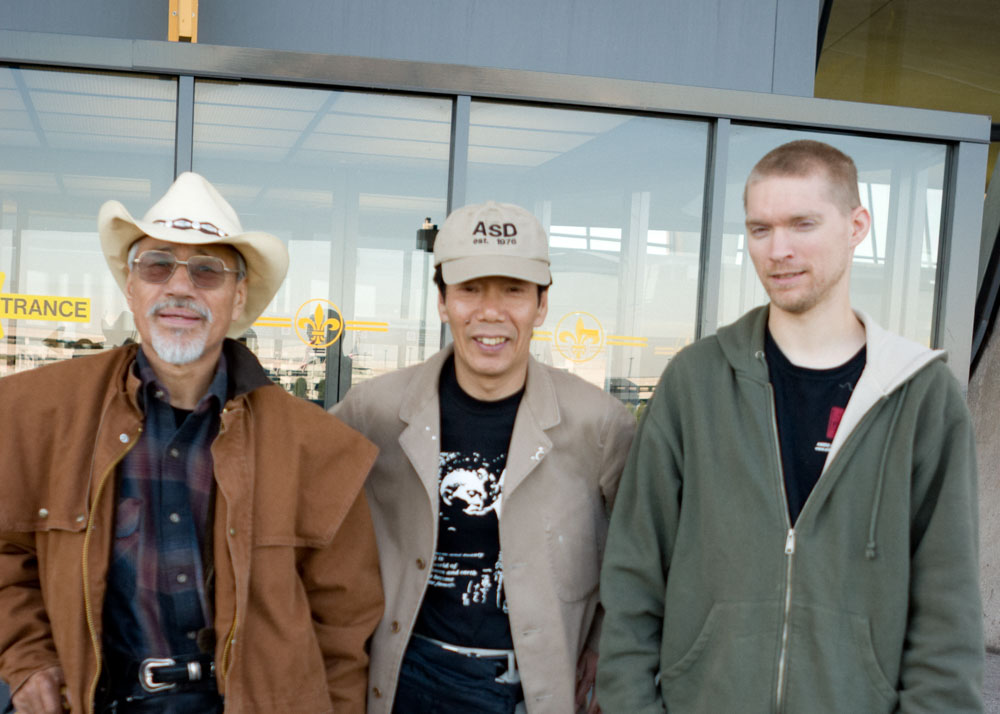
Aikido Shobukan Dojo Entrance
Photographer: Latex G.N.R. Space-Coyote (2007)
初日に見た道場の光景を、私ははっきり覚えている。その日は特別な有段者セミナーがあり、ある門下生(キャロル・アルスタット)が、私がその稽古を見学できるよう許可を求める必要があった。アラスカから航空機動軍(AMC)の便を乗り継ぎ、3日かけて来たのだと知ると、その門下生は快く私を中へ案内し、私はほとんどすべての稽古に参加した。
先生の動き、先生の語ることに、私は心を強く動かされた。そしてその直後、私は先生を研究し始めた――その順番で。これこそ、私が生涯探し求めていたものだった。だから私は、軍を離れたら戻って来ようと決め、実際にそうした。除隊後、住まいが見つかるまで私はD.C.のかなり南方にある実家で一時的に暮らした。午前4時ごろに約107km運転して出勤し、仕事が終わると約24km運転して道場へ行き、2時間半稽古をして、それから約100km運転して帰宅した。週に毎日それをやった。今思えば狂気じみている。振り返ると、私は1日に230kmも移動していたことになる。
1990年代半ばの聖武館道場は、信じられないほど活気に満ちていた。有段者が何列にも並んだ。先生が町にいるとき――セミナーの1週間、2週間、時には3週間前から到着して――平日の夜の多く、平日の朝の一部、そして土曜の朝を नियमित的に指導していた。時には奥様のパティ・五月女も後から来て指導することがあった。素晴らしかった。そして稽古相手が本当にたくさんいた……。
I remember seeing the dojo clearly the first day, that day there was a special yudansha seminar, and one of the students (Carol Alstatt) needed to ask permission for me to see the session. After learning that I had traveled all the way from Alaska via three days of Air Mobility Command (AMC) flights, the student gladly brought me in, and I visited nearly every session. I remember being emotionally moved by Sensei’s movements, what he spoke about, and then immediately started studied him, in that order. This is what I was looking for my entire life, and I decided to come back after departing the military, which I did. After the military, I lived temporarily with my parents far south of D.C. until I could find a place. I drove about 107 km to work at about 4 AM, then after work would drive 24 km to the dojo, train for two and a half hours, then drive 100 km back home. I did this ever day of the week, it was crazy. Looking back, I was traveling 230 km a day.
Shobukan dojo in the mid-1990’s was extremely busy. There were rows and rows of yudansha, and when Sensei was in town, arriving one, two, or three weeks before a seminar, he’d regularly teach most weekday evenings, some weekday mornings, and Saturday mornings. Sometimes his wife Patty Saotome would come along later and teach as well. It was amazing; and there were so many people to practice with…

五月女先生とパティ五月女先生の歴史ある自宅の玄関
写真家: ラテックス G.N.R. スペース・コヨーテ(2007)
The front door of Saotome Sensei and Patty Saotome Sensei’s
historical home at Aikido Shobukan Dojo
Photographer: Latex G.N.R. Space-Coyote (2007)

This is a second in a series of articles on uchi-deshi life, stay tuned for more later. For reprints into other languages, please submit a contact request.
Notes
1 See the entirety of Ariyapariyesana Sutta, Kukkuravatika Sutta, Karen Horney’s Theory of Neurotic Needs, and limitless matters related to [topological primes] cognitive levels of development, Freud to Kegan.
References
Jarrett, L.S. (2001). Nourishing Destiny: The Inner Tradition of Chinese Medicine. Stockbridge: Spirit Path Press.
Schiller, D. (1994). The Little Zen Companion. New York: Workman Publishing Company.
Tzu, L. (1990). Shambhala Pocket Classics: Tao Te Ching (J.C.H. Wu, Trans.). Boston: Shambhala Publications Inc.